At DC Central Kitchen, were outfitting our very first delivery can and readying for our opening day of operations on January 20, 1989.
DC Central Kitchen was founded by young nightclub manager named Robert Egger. Frustrated and challenged by his volunteer experiences with traditional charitable responses to hunger and homelessness, Robert pioneered a new model aimed at liberating people from the conditions of poverty.
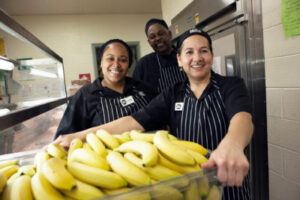
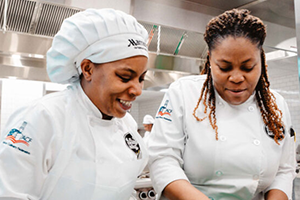
Robert’s idea for a ‘central kitchen’ involved picking up wasted food (which people said was unwise), turning it into balanced meals for shelters and nonprofits (which people said was unsustainable), and using that process to train jobless adults in the culinary arts (which people said was impossible). These concepts weren’t just possible. They were ahead of the curve. After turning the soup kitchen model on its head, Robert became an early adopter of ‘social enterprise’ and started hiring DC Central Kitchen culinary graduates to staff revenue-generating contracts in 1996.
He also instilled a proud ‘open source’ tradition at DC Central Kitchen, helping to start more than 60 like-minded central kitchens across the United States through the 1990s. In 2001, he launched another social venture, The Campus Kitchens Project, aimed at scaling our approach nationally by engaging college students in recovering wasted food from dining halls that they could use in preparing meals for their own community.
In 2004, Michael F. Curtin, Jr. joined us as our Chief Operating Officer. Curtin focused on building the social venture portfolio of DC Central Kitchen while Robert led national conversations about rethinking the fight against hunger and the economic role of nonprofits. In 2007, Michael became CEO and in 2008, he led the development of our Healthy School Food venture, a step that allowed DC Central Kitchen to double in size and impact in the face of a recession. In 2011, we launched the Healthy Corners venture, proving strong levels of demand for healthy food in low-income ‘food deserts’ and pioneering a new approach to increasing the quantity of nutritious items available on these small retailers’ shelves.
In 2012, Robert moved to Los Angeles to start another innovative and like-minded, but unaffiliated, nonprofit and social enterprise called LA Kitchen. Since then, DC Central Kitchen has continued to forge ahead, winning the top national award for healthy school innovation, the Golden Carrot, earning two White House Champion of Change Awards, and celebrating the graduation of our 100th culinary class and opening of our 50th Campus Kitchen. Our successes have been featured by respected outlets like National Geographic, the PBS NewsHour, the Atlantic, The Washington Post, The New York Times, Newsweek, and The Chronicle of Philanthropy.